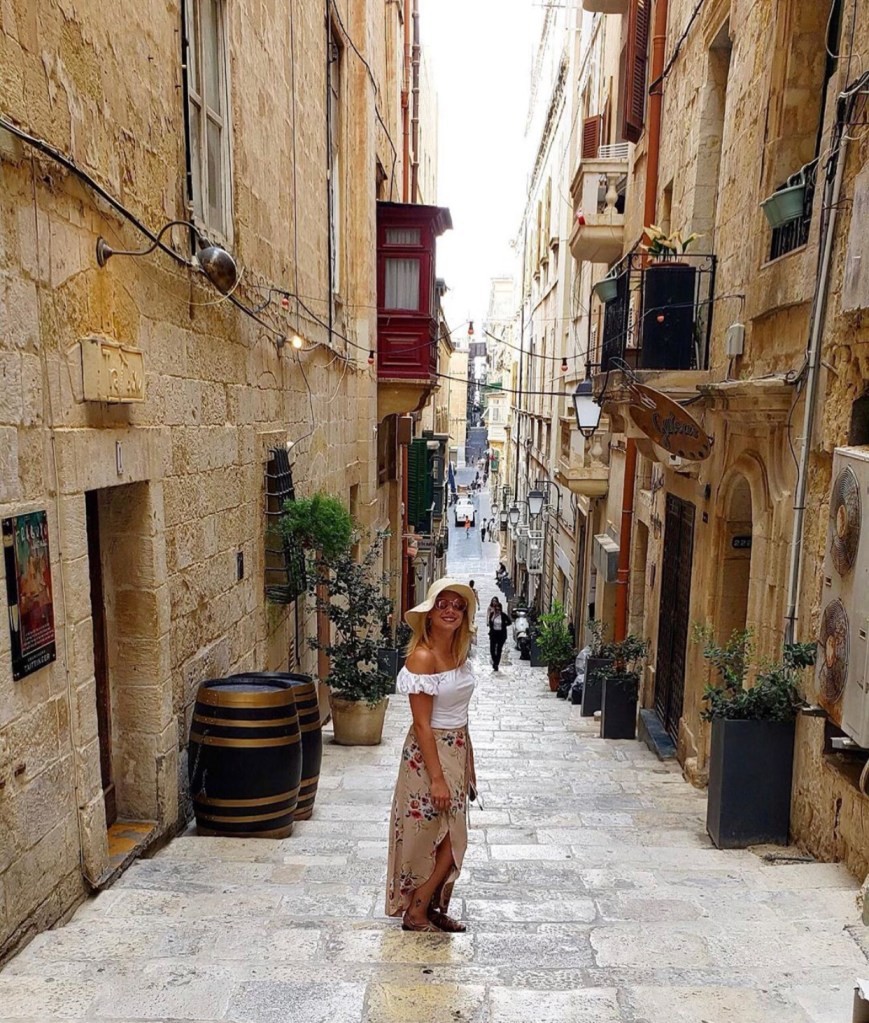
Featured

Allow Me to Introduce Myself…

“Blogging is a communications mechanism handed to us by the long tail of the Internet.”

— Tom Foremski

My name is Cydney Black. I am a 21-year-old junior studying Communications and Media Arts with a minor in Public Relations at Montclair State University. A tacky introduction at best, I know. However, I believe it is important for me to introduce myself, as such, for the possible audience that may be reading this and for the future Cydney looking back at this blog and reflecting on what I have learned and how much I have grown throughout my college career. In reality, this blog is my final project for my Writing for the Media class, but I have done several of these for a plethora of different classes and I love looking back on them and seeing how my writing has changed and what I have learned and how my views on different things have changed. I know future Cydney is going to have an issue with that run-on sentence, but hey, this is my blog and I’ll write as I please.
For the assignment, Professor Kaplan asked for five blog posts on basically anything involving the news or media, which is broad but allows for a lot of freedom and creativity. I have started this assignment a little late as we were asked to write these blog posts throughout the semester, but the semester is not over yet and I still have much to say. Let me be clear, this is not one of the blog posts. I just thought it would be nice to give a little insight on me and my back story, so let’s get back to me.
My interest in communications began in high school. When asked what field we wanted our career to be in, I did some research and found about 20 jobs in communications that interested me greatly. From there, I had to narrow it down. I originally went into college with an interest in news broadcasting. I loved my classes but hated my gen eds. That hate resulted in me not showing up for them and ultimately failing a class.
I knew I was not ready for college, so I joined a domestic Peace Corps program, known as AmeriCorps National Civilian Community Corps. In that program, I traveled all around the U.S. performing national and community service. From the program, I gained an addiction to travel and helping others. I spent the summer after graduating from the program traveling to different countries and doing local community service.
After that summer, I enrolled at Montclair State University. However, transferring was hard and though I still traveled, I didn’t have a lot of friends and wasn’t performing any community service. I joined Tri Sigma on campus as a way to get more involved, make more friends, and helps others, which changed my whole college experience.
I am now balancing all the things I love in life and doing much better in school maintaining a 3.9 GPA. I am excited about my future, hopefully working in public relations, but we’ll see. For now, let’s dive into some media.
What is Cancel Culture and What are the Effects of Being Canceled?

Illustration by Tracy Ma/The New York Times.

2019 brought about a new popular term within media, known as “cancel culture”. We have discussed this term quite a bit in class and the backlash it has caused on the lives of the people who were “canceled”. Macmillan Dictionary describes cancel culture as, “the practice of no longer supporting people, especially celebrities, or products that are regarded as unacceptable or problematic”. 

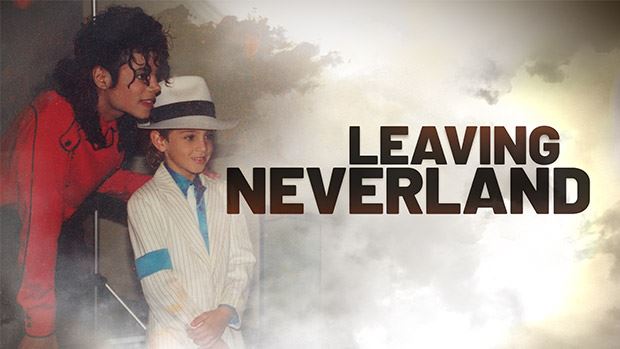
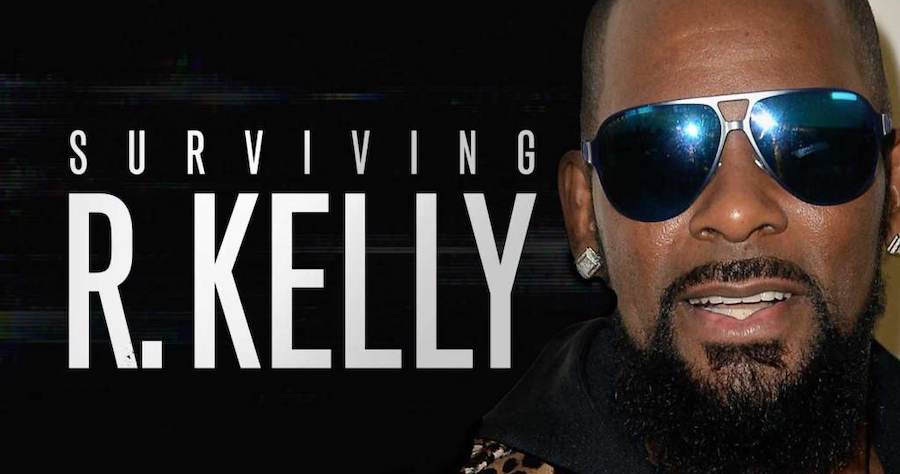
For example, R. Kelly was considered canceled after the Lifetime documentary, “Surviving R. Kelly”, was released in which the singer was accused of abuse and pedophilia. The film sparked a law enforcement investigation on the singer. Even Michael Jackson, who passed away over 10 years ago, was considered canceled, earlier this year, after the release of the HBO documentary “Leaving Neverland” which made claims that he sexually abused two young boys. The film tarnished Jackson’s legacy and caused slander to his name. Now, the cancellations of these two singers are more serious as it involves major legal and ethical issues. 

However, Jonah Engel Bromwich from the New York Times brings up an interesting point about cancel culture in his article, “Everyone Is Canceled”. Bromwich states that any celebrity can be canceled for anything as cancel culture continues to thrive. “If you announce that someone is canceled, they’re canceled,” said Bromwich. He goes on to explain how cancel culture comes from users of social media wanting to take control over celebrities and their content.

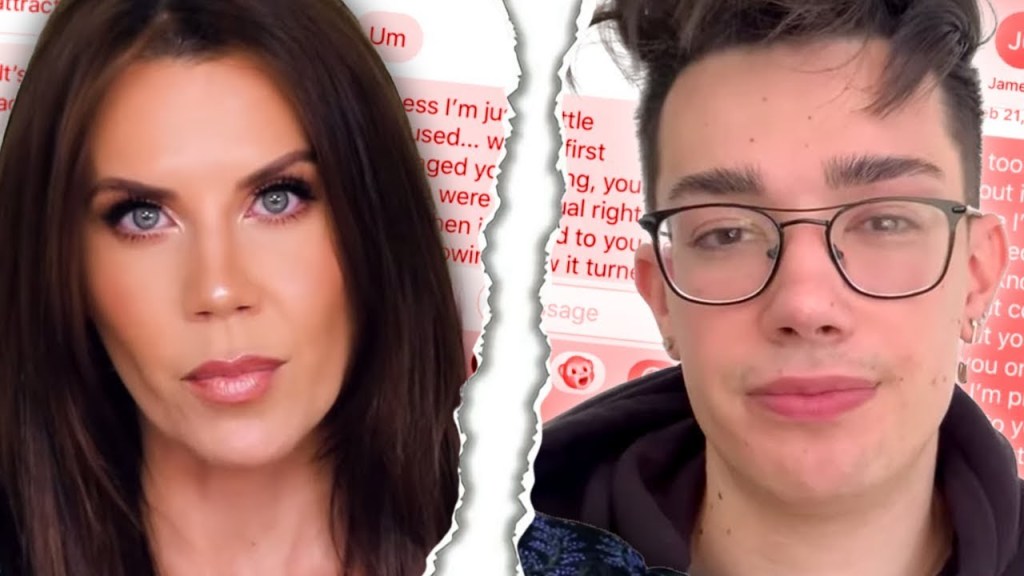
James Charles, a famous beauty blogger on Youtube, was considered canceled earlier this year after a feud between him and another beauty blogger, Tati Westbrook. Because of the feud, Charles lost millions of followers on all social media platforms in a matter of days. Charles had to take a break from social media for a while after the feud for mental health issues, exposing the dangers of being canceled. 

In my opinion, cancel culture is nothing but a fad. However, the dangers it brings involving celebrities’ mental health and well-being are concerning. Even if it is just a fad, nobody should be verbally attacked and have their reputation’s tarnished for making the mistakes that ordinary people make every day. More serious cases, such as R. Kelly and Michael Jackson, should be left to the law, but celebrities who wound up in a gossip circle should be viewed as human beings, not forms of media that users can have control over. 

The Carson King and Aaron Calvin Controversy In Regards to Ethical Journalism

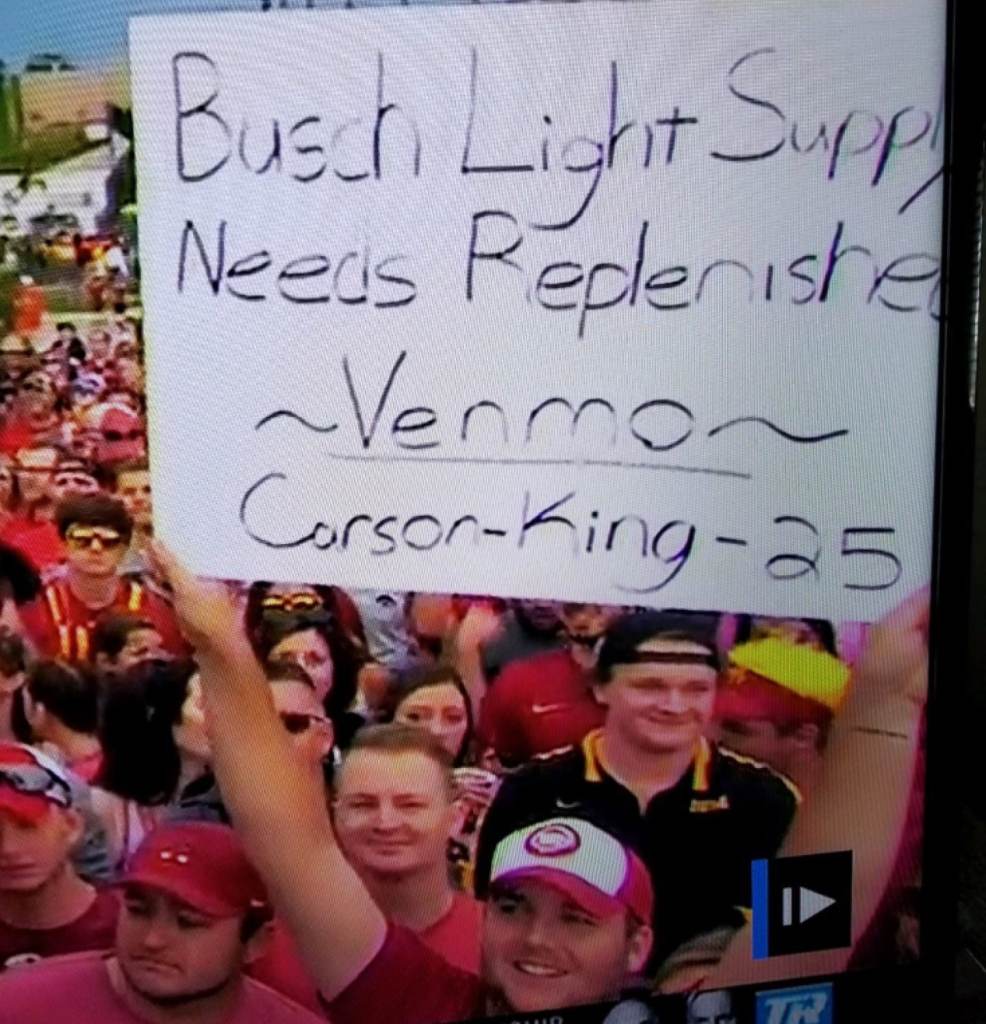
In class, we heavily discussed the media coverage of the controversy involving Carson King and Des Moines Register reporter Aaron Calvin. In the Washington Post article, “Iowa reporter who found a viral star’s racist tweets slammed when critics find his own offensive posts”, reporter Katie Shepherd discusses how Carson King, a 24-year-old man from Iowa, held a sign that went viral asking for Venmo donations for his “Busch Light Supply” during ESPN’s “College GameDay”. King received an excessive amount of money through the app and stated that he would be donating the extra money to a local children’s hospital. Anheuser-Busch decided to partner with King and match the donations he continued to make via the app. 

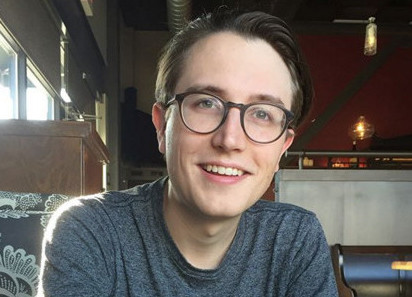
Shepherd goes on to explain how Aaron Calvin set out to write a profile on the local hero but found a couple of offensive tweets King had written when he was in high school. Calvin reached out to King before publishing the profile allowing King to hold a press conference stating his apologies and announcing that Anheuser-Busch had ended their partnership. In an update, below the headline of the article, Shepherd stated that Calvin had been let go from the Des Moines Register among all the controversy of the newspaper choosing to publish the headline and after critics had found offensive past tweets from Calvin, as well.

Aaron Calvin. Photo courtesy of Buzzfeed News.

I found this story especially interesting as it discusses the gray lines of ethical journalism and the backlash those lines can cause. The first principle of the SPJ Code of Ethics is to “seek truth and report it”. In Calvin’s defense, he sought after the truth, found it, and reported it. Whether it was ethical is the question that caused so much controversy on the subject as critics were angry that the Des Moines Register had taken someone seen as a hero and portrayed a bad lighting on him. The next principle of the SPJ Code of Ethics is to “minimize harm”. Critics condemned Calvin because he had caused harm to King by exposing him and causing him to lose his partnership with Anheuser-Busch. However, the fourth principle of the SPJ Code of Ethics is to “be accountable and transparent”, which the Des Moines Register did. The newspaper’s executive editor published a letter on Twitter apologizing for any harm the article may have caused and explained the newspaper’s reasoning for publishing the article. In my opinion, the newspaper should not have let go of Calvin, but I understand their reasoning for it. Just as Anheuser-Busch cut ties with King for public relations purposes, the Des Moines Register did the same with Calvin. 

Online Streaming Services and the Fate of Television News

Graphic by James Bareham/Polygon.

In April 2019, Disney revealed to the public that they would be offering a new online streaming service known as Disney+ combating other popular streaming services, such as Netflix, Hulu, and Apple TV. 

In the article, “Disney has a ‘major advantage’ as the streaming war heats up, says RBC’s Mark Mahaney” CNBC journalist, Eustance Huang, discussed how Disney+ had a major advantage over other streaming services. The advantage is called the “Black Catalogue”, which entails Disney spending billions of dollars each year to ensure it’s streaming has the best content. The author and other analysts compare the plan to Netflix, one of the most popular online streaming services, and the content it provides, or lack thereof. Netflix is not known for providing their customers with the most popular content aside from a few of its own produced content and a few critically-acclaimed shows. Disney planned on building better relationships with partners by providing them with a substantial amount of money to obtain access to the best content. 

Disney+ was finally released on November 12, 2019. In the article, “Disney+ is off to a roaring start with 22 million mobile downloads,” MarketWatch discussed how the app gained intense popularity at a rapid pace. “The app averaged 9.5 million daily active mobile users, landing the top spot on Apple’s and Google’s app stores,” (MarketWatch). Since the article was published, Disney+ users have been increasing for its content and series exclusive to the streaming service, such as The Mandalorian

It is no secret that online streaming has taken over within the last few years and pushed cable to the side. It provides viewers with the shows they want to watch on-demand and at a far lower price. Now with Disney+, streaming services are more popular than ever and cable television is suffering. Other streaming services will continue to compete to be the best making online streaming stronger and ultimately putting cable television to rest. However, in my opinion, there could be major consequences of losing cable television. Television news will die with it. 

Photo courtesy of Merriam-Webster.

Television news is mostly popular among the boomer generation. As a college student, I can observe that my peers are not watching the news on television and online streaming is a major contribution to that. However, this can be dangerous as the news is meant to inform the public on the world and everything around them. How can we make informed decisions on politics, our lifestyle, and our futures when the content we are consuming is, for the most part, fictional. These are merely observations and assumptions I am making, but being a communications student and seeing the ignorance among my peers is terrifying. I will be interested to see how it all pans out and if television news will make the full switch to online streaming.

Thoughts on President Trump’s Tweets and the Media…

Without Getting too Political

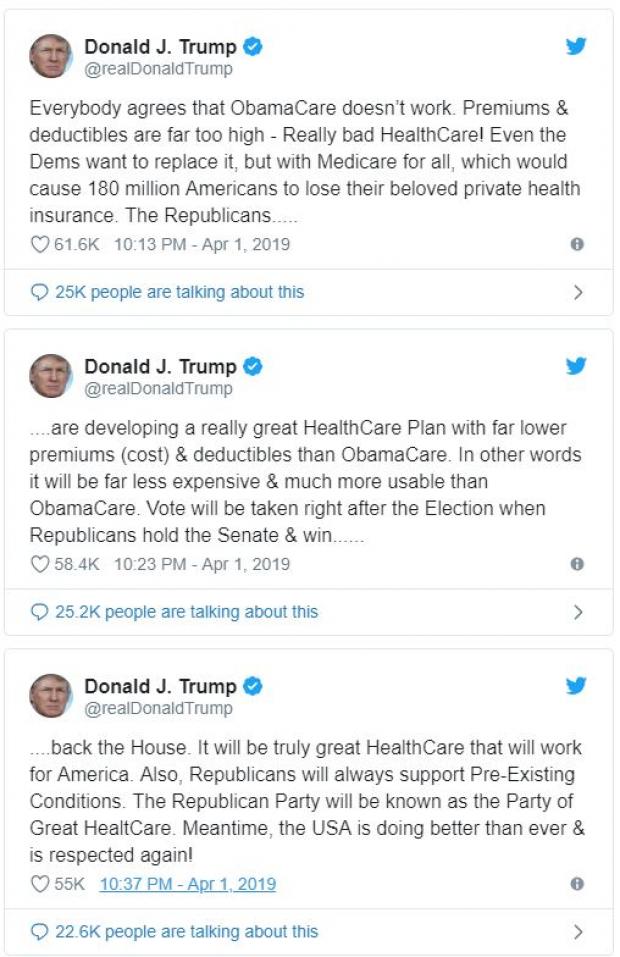
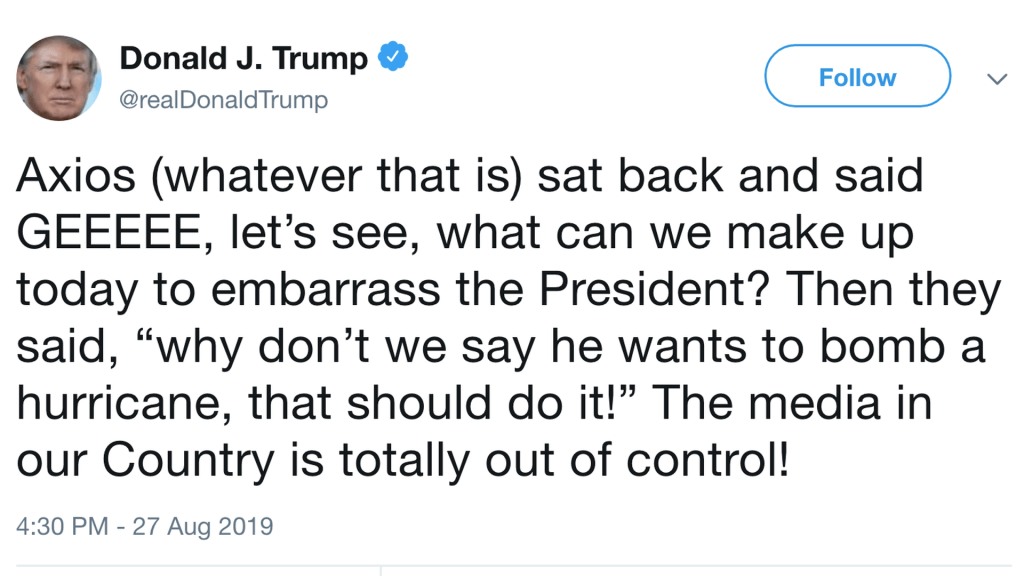
Screenshots of tweets derived from the @realDonaldTrump twitter account.

Throughout the year, President Donald Trump has posted some wild tweets from his @POTUS account. Monitoring his twitter since he became president, I have to say, the man knows how to practice his freedom of speech, but is it professional?
Brian Stelter of CNN discusses one of Trump’s famous tweets in his article, “Trump’s health care tweets are an opportunity for the news media”. Steltzer discusses President Donald Trump’s “tweetstorm” regarding healthcare. Stelter quotes the tweets from Trump that state his beliefs of ObamaCare not working and that the GOP is developing a proposal for a new healthcare plan that will be voted on after the next election. While Stelter pokes fun at President Trump for his typos in his tweets, he also commends him for bringing attention to healthcare on a national media outlet.

I chose to discuss this particular article for a few reasons. First, I agree with Stelter that national news media does not commit enough time to healthcare concerns. Most news outlets focus on the political issues that are trending and controversial because they are what grab an audience’s attention the most. However, it is Donald Trump’s job to address these issues, so I do not believe he should be praised for doing what is expected of him. I also believe that for Trump to be making announcements for such major political concerns on Twitter, as he has throughout his entire presidency, is unprofessional and ineffective. It is no secret that Trump is not a fan of the press. However, he should be making in-person, formal announcements with the press present rather than using a social media outlet with typos and incorrect grammar. Seriously, who does he pay to run these accounts?

I also chose to discuss this article because I believe it is a great example of unethical journalism. While most news stations, such as CNN and FOX, are known for incorporating their opinions, especially in regards to politics, this is not ethical journalism. Journalism is meant to provide facts and inform the public. It is not meant to persuade them into believing what the network does. Stelter makes sarcastic comments throughout the article multiple times which may be funny to a certain audience, but it is unprofessional and unethical journalism. Leave the comics to The Onion.

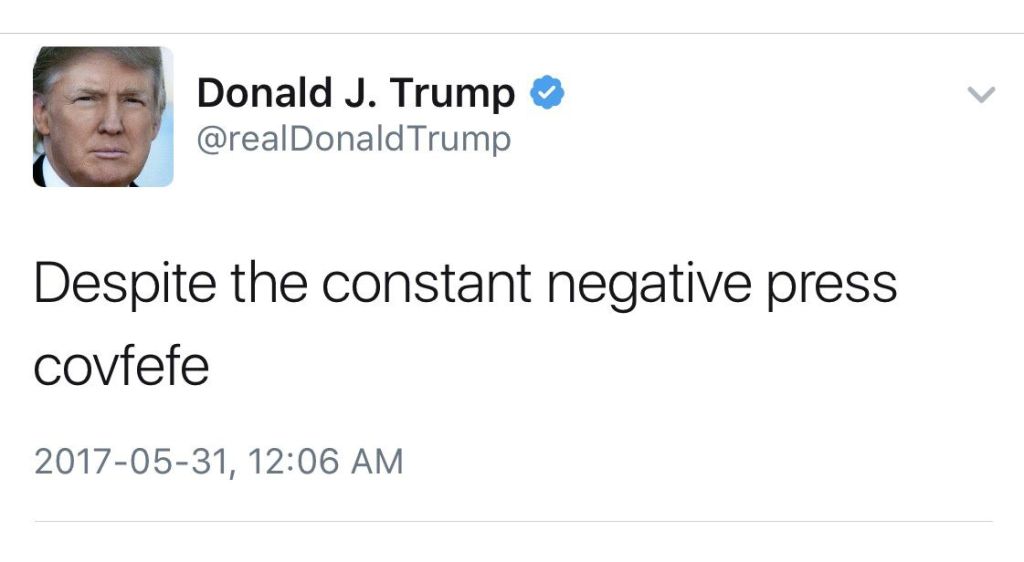
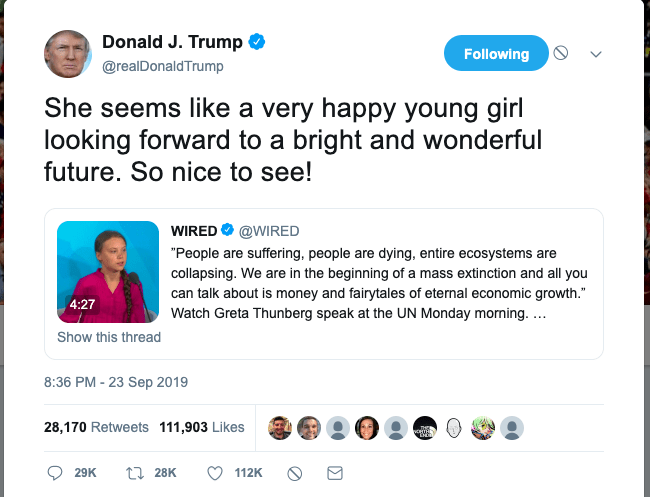
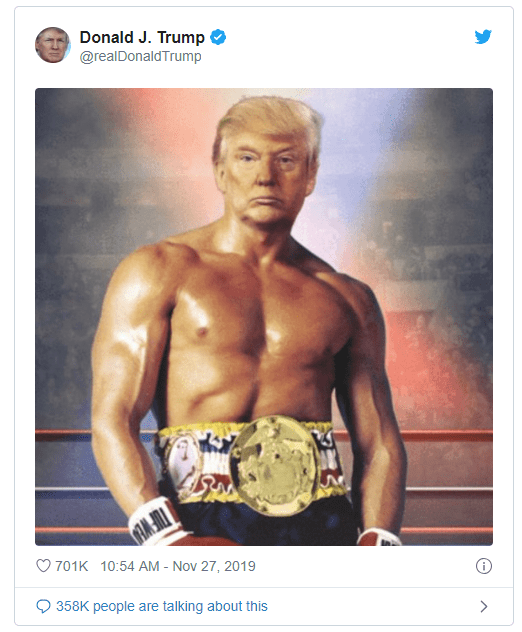
Now let’s look at some of Trump’s most famous ad controversial tweets throughout his presidency…

Screenshots of tweets derived from the @realDonaldTrump twitter account.

Privacy Concerns Regarding Social Media

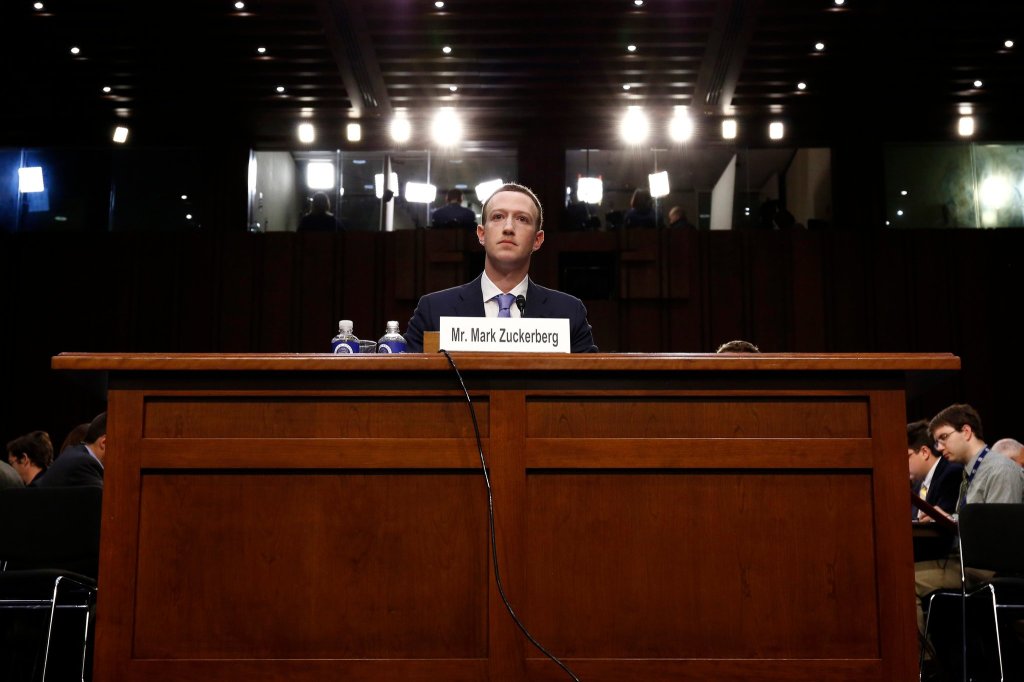
“Mark Zuckerberg, Facebook’s chief executive, at a Senate hearing in April.” Photo by Aaron P. Bernstein via The New York Times.

For these blog posts, I will be discussing huge news stories I can recall from 2019 involving media. For my first post, I want to talk about the Facebook privacy scandal and social media privacy concerns, in general.

In February of 2019, Facebook was officially accused by the United States government for sharing user’s personal information with other cellphone apps, stealing user’s information from other apps, and promoting minors to use their parent’s credit cards for in-app purchases. I gathered this information from Media Post’s article, “Facebook Accused On More Privacy Violations, Investigations Underway” by Gavin O’Malley. 

After a 16 month investigation, Facebook was officially charged in August of 2019 for the accusations and misleading it’s 2.2 billion users. The settlement required the company to pay five billion dollars to the Federal Trade Commission, as stated by Tony Romm, journalist of the Washington Post, in his article, “U.S. government issues stunning rebuke, historic $5 billion fine against Facebook for repeated privacy violations”. 

In my opinion, users of any social media, which is the vast majority of the public, have no privacy. They sign away their privacy rights with each “Terms and Conditions” they ignore but accept. Most users are aware of this lack of privacy, but truly do not care. Just think of how many people still have a Facebook even after this scandal was released, myself included. It has become a social norm to have no privacy. Every day social media users give out personal information to hundreds of other people without even batting an eye. In fact, they indulge in it.

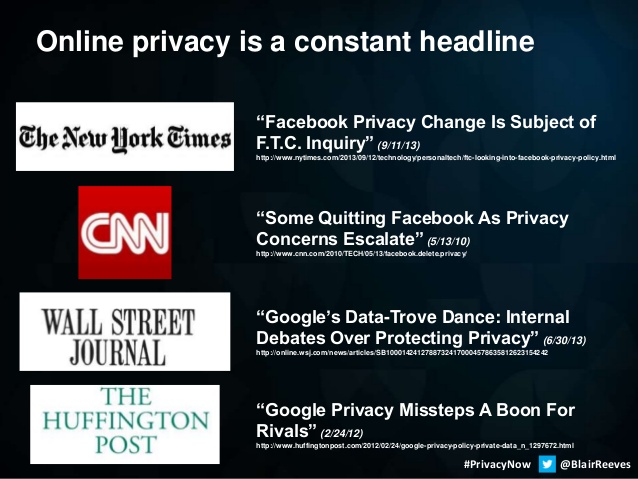
Slide on online privacy by Blair Reeves via Slide Share.

The point that I am trying to make is that for government officials to accuse and demand investigation of Facebook is virtually pointless. Facebook is not the only social media that invades their user’s privacy. It is all forms of social media and most users are not concerned about it. Although these privacy violations are unethical, it is not enough for officials to attack Facebook. If the government cared about the public’s privacy they would be accusing the FCC and every single social media website out there. I truly believe that social media has gotten way out of hand with user’s privacy being exploited and misused, but it has become almost uncontrollable. The government and FCC would have to target social media, as a whole, and come out with laws that would affect the user’s freedom within the apps.

Design a site like this with WordPress.com
Get started